
As the United States prepares to celebrate Independence Day on the 4th of July, it is crucial to remember an event that has significantly illuminated Humanity’s evolutionary path.
The USA’s origins are obscured in mystery, making it difficult to distinguish speculation from fact, just like the birth stories of many other nations.
In our quest for Truth, we prioritize seeking information from reliable sources. We have been influenced by the works of Manly P. Hall in “The Secret Teachings of All Ages”, Isabel Cooper-Oakley’s contributions to “Count Saint Germain”, and the introduction of “La Très Sainte Trinosophie.'”
In discussions about the creation of the United States, a recurring question is whether Sir Francis Bacon’s vision in his book “The New Atlantis and the Great Instauration” was a prophetic dream of the great civilization emerging in the New World? The “Hidden” Societies, united Fraternally with the Truth, had plans to establish a new nation on the American continent. This new nation was envisioned as being founded on freedom and dedicated to the principle that all human beings are created with equal opportunity.
The events of July 4, 1776, serve as a powerful example of the influence of a mysterious and powerful hand (often interpreted as the Force) guiding humanity towards progress and enlightenment. This Force empowers nations to uphold and promote Virtue and Justice, ensuring their prosperity. However, when nations stray from these ideals, they begin to decline until they fade away. While this is an intriguing topic, it’s not our primary focus.
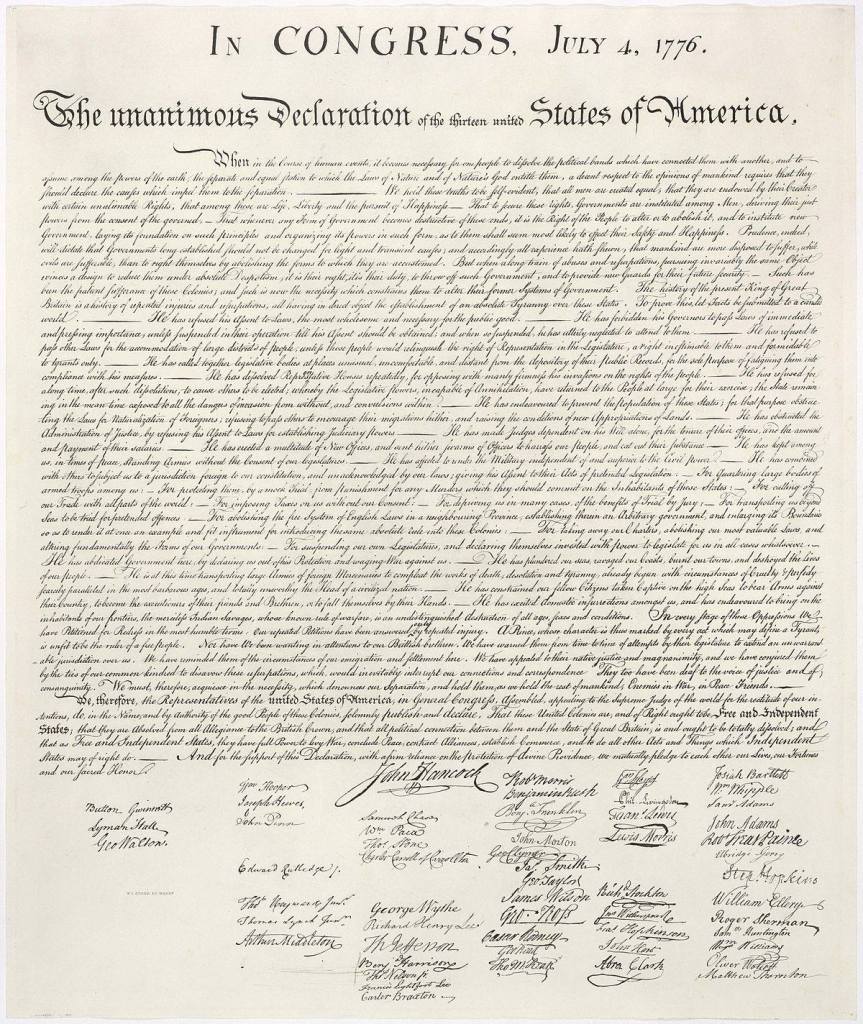
“The Declaration of Independence” brought hope to the oppressed by proclaiming freedoms and rights for those who were eyewitnesses to the event and for all generations to come.”
In the city of Philadelphia, a pivotal moment in the history of US independence unfolded. Within the old State House, a gathering of patriotic men convened to undertake the significant task of severing the final link between the old country and the new. Detailed accounts of this historic session can be found in Thomas Jefferson’s letters (preserved in the Library of Congress).
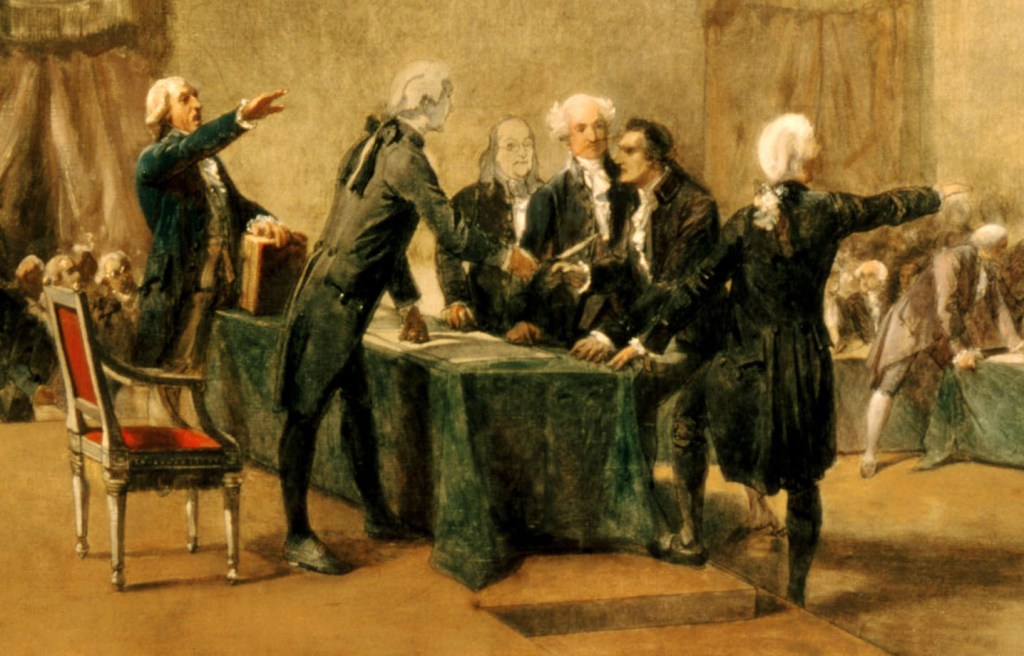
It was a moment filled with solemnity, and many among those present feared that their lives would be the price to be paid for such audacity. On that day, several speeches were proclaimed. Meanwhile, in the heat of the debate, a firm and convinced voice made itself heard. The participants stopped and turned to look at the “stranger.” Who was that man who had suddenly appeared in their midst and pierced them with portentous oratory? They had never seen him; no one knew when or how he entered, but his tall form and pale face filled us with amazement. With a voice that echoed with holy zeal, the “stranger” stirred the soul of each member.
His speech, provided below, served as an inspiration for the signing of the Declaration of Independence. It brought hope to the oppressed by proclaiming freedoms and rights for those who lived through the event and for all future generations.
Gibbet! They may stretch our necks on all the gibbets in the land; they may turn every rock into a scaffold; every tree into a gallows; every horne into a grave, and yet the words of that parchment can never die! They may pour our blood on a thousand scaffolds, and yet from every drop that dyes the axe a new champion of freedom will spring into birth! The British King may blot out the stars of God from the sky, but he cannot blot out His words written on that parchment there. The works of God may perish: His words never!
The words of this declaration will live in the world long after our bones are dust. To the mechanic in his workshop they will speak hope: to the slave in the mines freedom: but to the coward kings, these words will speak in tones of warning they cannot choose but hear…
Sign that parchment! Sign, if the next moment the gibbet’s rope is about your neck! Sign, if the next minute this hall rings with the clash of falling axes! Sign, by all your hopes in life or death, as men, as husbands, as fathers, brothers, sign your names to the parchment, or be accursed forever! Sign, and not only for yourselves, but for all ages, for that parchment will be the textbook of freedom, the bible of the rights of man forever.
Nay, do not start and whisper with surprise! It is truth, your own hearts witness it: God proclaims it. Look at this strange band of exiles and outcasts, suddenly transformed into a people; a handful of men, weak in arms, but mighty in God-like faith; nay, look at your recent achievements, your Bunker Hill, your Lexington, and then tell me, if you can, that God has not given America to be free!
It is not given to our poor human intellect to climb to the skies, and to pierce the Council of the Almighty One. But me thinks I stand among the awful clouds which veil the brightness of Jehovah’s throne.
Me thinks I see the recording Angel come trembling up to that throne and speak his dread message. ‘Father, the old world is baptized in blood. Father, look with one glance of Thine eternal eye, and behold evermore that terrible sight, man trodden beneath the oppressor’s feet, nations lost in blood, murder, and superstition, walking hand in hand over the graves of the victims, and not a single voice of hope to man!’
He stands there, the Angel, trembling with the record of human guilt. But hark! The voice of God speaks from out the awful cloud: ‘Let there be light again! Tell my people, the poor and oppressed to go out from the old world, from oppression and blood, and build My altar in the new.’
As I live, my friends, I believe that to be His voice! Yes, were my soul trembling on the verge of eternity, were this hand freezing in death, were this voice choking in the last struggle, I would still, with the last impulse of that soul, with the last wave of that hand, with the last gasp of that voice, implore you to remember this truth-God has given America to be free!
Yes, as I sank into the gloomy shadows of the grave, with my last faint whisper I would beg you to sign that parchment for the sake of those millions whose very breath is now hushed in intense expectation as they look up to you for the awful words: ‘You are free.’
Who was that “mysterious speaker”?This mysterious speaker, to whom some historians allude, is none other than the famous Count Saint Germain.
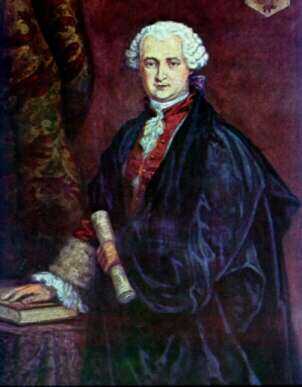
Described by those who lived with him as a “friend of all humanity,” as Voltaire well stated. The Count firmly believed in a better world and made himself at the service of mankind. He advised kings and princes, opposing deceitful ministers to help nations avoid problems. However, human pride, vanity, and arrogance often led to his warnings being ignored, and people had to learn the hard way through experience.
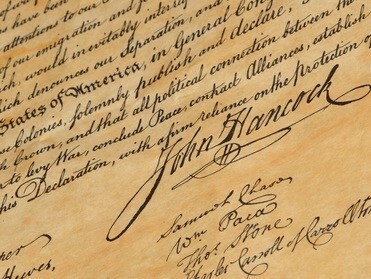
When he sank into a chair at the end of his speech, a palpable sense of hope filled the room. As each name was penned onto the parchment, the Declaration of Independence came to life. Yet, the enigmatic Count Saint Germain, who had ignited the courage within the group and set this momentous task in motion, vanished without a trace.
To conclude this essay, we wish the American people a joyful day. On this occasion, let us consider whether the nation continues to uphold its founding principles. Nonetheless, we question ourselves: Are China’s growing challenges and rising populism indicative of a potential decline for the country?
Recommended readings
Manly Palmer Hall – The Secret Teaching of all Ages
Isabel Cooper-Oakley – Conde Saint Germain
 RMP Consulting Services